
India Moves Beyond Smartphone Assembly as Electronics Manufacturing Deepens
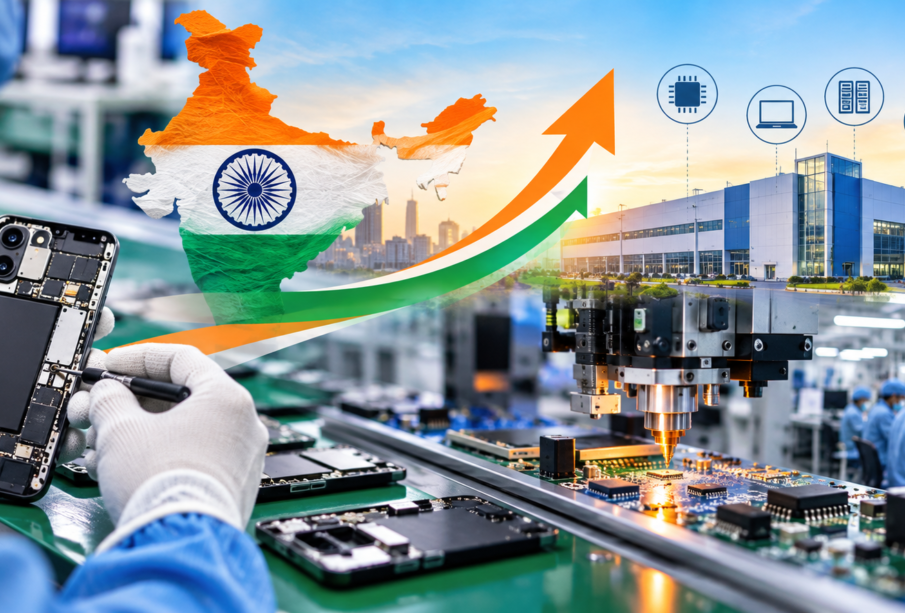
Electronics Manufacturing Growth.
India’s electronics manufacturing industry is entering a new phase as the country expands its focus beyond assembling finished smartphones to producing the components, materials and sub-assemblies that go inside electronic devices.
Union Electronics and Information Technology Minister Ashwini Vaishnaw said on September 25 that India’s manufacturing ecosystem is increasingly moving deeper into the smartphone supply chain. The areas highlighted include battery materials, cameras, displays, speakers, printed circuit boards (PCBs), connectors and other components.
The development comes as the government continues to strengthen domestic electronics production through schemes aimed at increasing local value addition and reducing dependence on imported components.
India Shifts Focus From Smartphone Assembly to Components
Over the past decade, India has significantly expanded its mobile phone manufacturing capacity. The next stage of this development is focused on increasing the amount of manufacturing that takes place within the country’s broader electronics supply chain.
Vaishnaw said India is now manufacturing not only complete smartphones but also a growing range of components and materials used in those devices.
The areas highlighted include:
- Lithium-ion battery cells
- Synthetic graphite
- Battery electrolyte materials
- Acetylene black
- Camera modules
- Displays
- Speakers
- Coils
- Printed circuit boards
- Connectors
This represents a shift from an assembly-led model toward a wider electronics manufacturing ecosystem.
Electronics Components Manufacturing Scheme Gets Bigger Push
Government policy is also supporting the expansion of domestic component manufacturing.
The Electronics Components Manufacturing Scheme (ECMS) was designed to strengthen India’s electronics supply chain by supporting domestic production of components, sub-assemblies, materials and related capital goods.
According to the Press Information Bureau, the scheme’s outlay was increased to ₹40,000 crore in the Union Budget 2026–27. As of August 2026, 106 projects across 15 states had been approved, involving an approved investment of ₹69,548 crore.
The government says these approved projects are expected to generate approximately ₹5.34 lakh crore in production, along with more than 74,000 direct jobs and around 2.5 lakh indirect jobs.
Why Component Manufacturing Matters
A smartphone is made up of hundreds of components and materials. Producing more of these inputs domestically can create opportunities for companies operating at different levels of the manufacturing chain.
These include:
- Component manufacturers
- Electronics suppliers
- PCB manufacturers
- Battery manufacturers
- Precision engineering companies
- Testing and assembly companies
- Industrial equipment suppliers
- Raw-material producers
A deeper supplier network can also reduce the distance between component producers and final assembly plants.
Battery Manufacturing Becomes an Important Area
Battery manufacturing is another part of India’s expanding electronics ecosystem.
The government has highlighted the development of domestic lithium-ion battery cell production as well as manufacturing of materials used inside battery cells.
Synthetic graphite, electrolyte additives and acetylene black are among the materials being highlighted as part of this broader manufacturing push.
This development is relevant beyond smartphones because battery technology is increasingly important across electric vehicles, energy storage systems and other electronic products.
India’s Electronics Production Has Expanded Rapidly
The expansion of component manufacturing builds on significant growth in India’s overall electronics industry.
According to the Press Information Bureau, India’s electronics production increased from approximately ₹1.9 lakh crore in 2014–15 to ₹13.11 lakh crore in 2025–26.
Electronics exports also increased from more than ₹38,000 crore to approximately ₹4.24 lakh crore over the same period.
The government is now focusing on increasing domestic value addition so that a larger share of the electronics supply chain is located within India.
Semiconductor Manufacturing Adds Another Layer
The electronics manufacturing push is also connected with India’s semiconductor strategy.
At SEMICON India 2026, the government outlined a broader semiconductor ecosystem covering design, materials and machines, fabrication plants, assembly and testing, research and development, and talent development.
The government said five semiconductor manufacturing plants had commenced commercial production, while the next phase of the India Semiconductor Mission is intended to expand capabilities across the wider semiconductor value chain.
This is important because semiconductors form a fundamental part of smartphones, automobiles, industrial equipment, telecommunications infrastructure and other electronic systems.
What This Could Mean for Indian Manufacturers
The expansion of domestic electronics manufacturing could create opportunities for Indian companies that supply components, materials, machinery and specialized manufacturing services.
Small and medium-sized manufacturers may also find opportunities through supplier networks supporting larger electronics companies.
However, building a competitive electronics ecosystem involves more than establishing production facilities. Companies need access to technology, skilled workers, quality-control systems, reliable infrastructure and global supply chains.
India’s ability to develop these capabilities will determine how deeply domestic manufacturers can participate in the global electronics industry.
Global Electronics Supply Chains Are Changing
The electronics industry is also experiencing changes in global supply chains as manufacturers look to diversify production across different countries.
India has already attracted major smartphone manufacturing operations and has expanded its role in global electronics production. The country’s current strategy is increasingly focused on capturing more value within the domestic supply chain rather than concentrating mainly on final assembly.
This could gradually increase opportunities for Indian component manufacturers and technology suppliers.
What Comes Next for India’s Electronics Industry?
The next phase of India’s electronics manufacturing story will likely depend on how quickly domestic companies can scale component production and integrate with global manufacturers.
Government-backed programmes such as ECMS and the semiconductor initiatives provide financial and policy support, while manufacturers will need to build competitive capabilities in technology, quality, cost and production efficiency.
For India, the broader objective is to develop an electronics ecosystem that covers more stages of the value chain—from materials and components to finished products and advanced semiconductor technologies.
The recent statements from the government indicate that the focus is moving in that direction.
Frequently Asked Questions
Is India manufacturing smartphone components?
Yes. India is increasingly manufacturing a wider range of smartphone components and materials, including batteries, cameras, displays, PCBs, speakers and connectors.
What is the Electronics Components Manufacturing Scheme?
The Electronics Components Manufacturing Scheme, or ECMS, is a government programme designed to support domestic manufacturing of electronics components, sub-assemblies, materials and related capital goods. Its outlay was increased to ₹40,000 crore in the 2026–27 Budget.
How much has India’s electronics production grown?
According to government data, electronics production increased from ₹1.9 lakh crore in 2014–15 to ₹13.11 lakh crore in 2025–26.
Is India also developing semiconductor manufacturing?
Yes. India’s semiconductor programme is expanding across chip design, manufacturing, assembly, testing, materials, equipment, research and talent development. The government said five semiconductor manufacturing plants had commenced commercial production as of September 2026.
Why is component manufacturing important for India?
Component manufacturing can increase domestic value addition and create a broader supplier ecosystem around electronics production. It can also help reduce dependence on imported components.
Conclusion
India’s electronics manufacturing sector is moving into a deeper phase of development. The focus is increasingly shifting from assembling finished smartphones to producing the components, materials and technologies that make those devices possible.
With the ECMS receiving a larger allocation and semiconductor programmes expanding, the coming years will be important for Indian manufacturers, suppliers and technology companies looking to participate in the electronics value chain.
The key question now is how quickly this expanding manufacturing base can translate into a larger, globally integrated ecosystem of Indian component and technology companies.
Know More : https://24x7world.com/ashish-vaidya-ml-books-international-daryaganj/




Leave a reply









At 24x7World.com, we’re passionate about keeping you informed and engaged with the latest news from around the globe, 24/7. We’re not just another news website; we’re your go-to source for timely, accurate, and relevant updates on everything that matters.

