
India’s Retail Inflation Rises to 5.54% in September 2026 as Food Prices Increase
Inflation
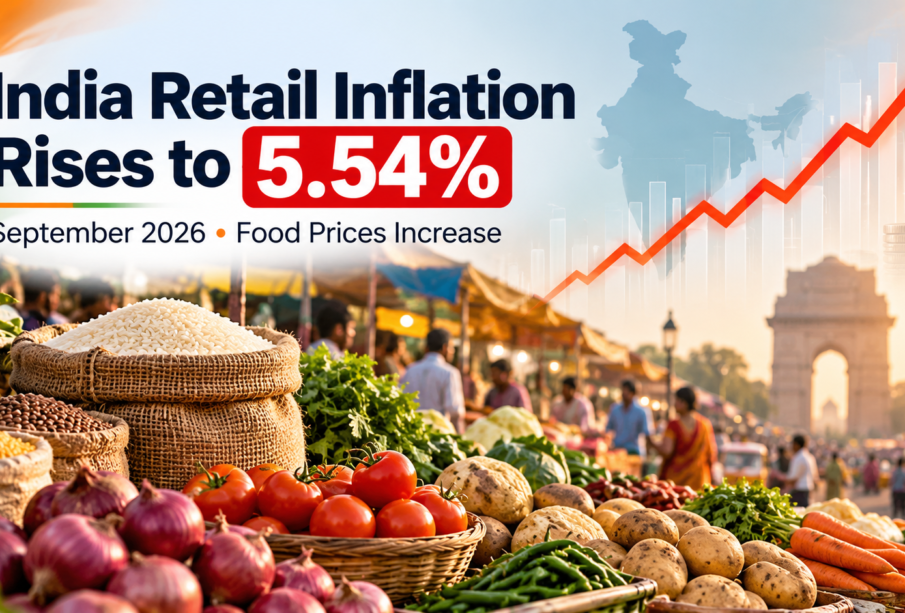
India’s retail inflation rose to 5.54% in September 2026, compared with 4.83% in August, according to provisional government data. Food inflation also increased to 7.74%, highlighting growing pressure on household budgets and the wider economy. The figures have renewed attention on the cost of living, agricultural supply and the Reserve Bank of India’s approach to controlling inflation.
The latest increase matters because food and other essential expenses account for a substantial share of household spending. When prices rise faster than incomes, families may have less money available for education, healthcare, travel and other discretionary expenses.
For businesses, inflation can increase operating costs and affect consumer demand. For policymakers, the challenge is to control persistent price increases without unnecessarily slowing economic growth.
What Is Retail Inflation and Why Does It Matter?
Retail inflation measures the change in prices consumers pay for a basket of goods and services over time. In India, the Consumer Price Index (CPI) is widely used to measure this change.
The index includes different categories, such as food, housing, clothing, transportation, healthcare and household requirements. Changes in these prices help policymakers understand how the cost of living is evolving.
When inflation rises, consumers generally need to spend more to purchase the same basket of goods and services. However, the impact varies depending on household income, spending habits and the products becoming more expensive.
For example, a family that spends a significant portion of its monthly income on groceries may feel the effects of rising food prices more strongly than a household with a different spending pattern.
Inflation is also important for businesses. Companies may need to pay more for raw materials, transportation, packaging and other operational expenses. If they cannot pass these increases on to customers, their profit margins may come under pressure.
The September figures indicate that India’s overall retail inflation increased, while food inflation rose at a faster rate.
Food Inflation Reaches 7.74% in September
Food inflation increased from 5.97% in August to 7.74% in September 2026.
Food prices have a direct effect on everyday life because households regularly purchase vegetables, cereals, dairy products, edible oils and other essential items.
When prices rise across several food categories, families may need to adjust their budgets. Some may switch to less expensive products, reduce non-essential purchases or change their shopping habits.
The impact can be especially difficult for households with limited savings or irregular income. Even a moderate increase in essential expenses can create financial pressure when there is little room to reduce spending.
Food inflation can also influence consumer confidence. When households expect groceries and other necessities to become more expensive, they may postpone purchases that are not immediately required.
However, inflation does not mean that every food product becomes more expensive at the same rate. Prices can vary considerably across products, cities and states.
Understanding the causes of these changes is important for assessing whether price pressure is temporary or likely to continue.
What Is Causing Prices to Rise?
Several factors can contribute to food inflation and changes in the broader price level.
1. Weather conditions and agricultural production
Agriculture depends on rainfall, temperature and seasonal conditions. Unfavourable weather can affect crop production, harvesting schedules and the availability of particular food products.
When supplies become limited while demand remains steady, prices may rise. Perishable products can be especially sensitive because they require timely transportation and suitable storage.
Weather-related supply problems can also affect farmers, wholesalers and retailers, making the effects visible across the food supply chain.
2. Transportation and distribution costs
Food products often travel long distances before reaching consumers. Transportation, storage, packaging and distribution all contribute to the final retail price.
When fuel and logistics expenses increase, suppliers may face higher costs. Some of these costs may eventually be reflected in consumer prices.
Efficient storage, better transportation infrastructure and reduced food wastage can help improve supply-chain performance, although these measures do not eliminate every cause of inflation.
3. Changes in supply and demand
Prices are influenced by the relationship between available supply and consumer demand.
If demand increases faster than supply, prices may rise. If production improves and more products reach the market, prices may moderate.
Seasonal demand can also affect particular products. These changes mean that inflation may not move uniformly across all categories.
4. International commodity prices
India imports several important commodities, including crude oil. International price movements can affect domestic transportation, manufacturing and distribution costs.
The extent of the impact depends on exchange rates, taxes, import costs and how businesses adjust their prices.
This is one reason inflation needs to be assessed alongside developments in global commodity markets.
Rural and Urban Inflation: Understanding the Difference
The September data showed rural inflation at 6.08%, compared with 4.88% in urban areas.
The difference highlights how inflation can affect households differently depending on location and spending patterns.
Rural households may face pressure from higher food prices while also dealing with changes in agricultural income and employment opportunities. Urban households may experience higher expenses across groceries, transport, housing and services.
However, these figures represent average price changes rather than the experience of every household. Individual circumstances can differ considerably.
Income growth, household savings, employment stability and local market prices all influence the practical effect of inflation.
For policymakers, comparing rural and urban inflation can help identify where price pressure is more pronounced and which categories require closer monitoring.
How Could Inflation Affect the Indian Economy?
Inflation can influence economic activity through consumer spending, business costs and monetary policy.
When essential expenses rise, households may have less money available for discretionary purchases. This can affect sectors such as retail, restaurants, entertainment, travel and consumer goods.
Businesses may also experience higher costs for raw materials, electricity, transportation and wages. Companies with limited pricing flexibility can find it difficult to protect their margins.
Persistent inflation can also affect borrowing costs. Central banks consider inflation trends when deciding whether monetary policy should remain unchanged, become tighter or become more supportive of economic activity.
Higher borrowing costs may influence home loans, vehicle loans and business financing, although the impact depends on individual loan terms and future policy decisions.
For these reasons, inflation is not just a measure of changing prices. It is also an important indicator of economic conditions.
What Does the Inflation Increase Mean for the RBI?
The Reserve Bank of India monitors inflation as part of its monetary policy responsibilities. Its medium-term inflation target is 4%, with a tolerance range of 2% to 6%.
September’s inflation rate of 5.54% remained within the tolerance range but was above the medium-term target.
A sustained increase in inflation may strengthen the case for tighter monetary policy. However, decisions depend on the full economic outlook, including food prices, core inflation, growth, exchange rates and international developments.
Interest-rate changes cannot immediately resolve every supply-related problem. For example, if vegetable prices rise because of reduced availability, improving supply may be more directly relevant than changing borrowing costs.
The RBI therefore needs to consider both immediate inflation readings and the likelihood that price pressures will persist.
Consumers and businesses should avoid assuming that a single monthly report guarantees a particular interest-rate decision.
How Can Consumers Manage Rising Living Costs?
Households cannot control national inflation, but a few practical measures can help manage monthly expenses.
-
Prepare a monthly budget that prioritises essential purchases.
-
Compare prices across retailers and local markets where practical.
-
Plan meals to reduce food waste and unnecessary grocery purchases.
-
Review subscriptions and recurring expenses that are no longer needed.
-
Build emergency savings when income and circumstances allow.
These steps cannot remove the effects of inflation, but they may help households make better use of available income.
What Should Businesses Do During Inflation?
Businesses can respond to rising costs by reviewing purchasing arrangements, managing inventory and reducing avoidable waste.
Retailers may improve stock planning, while manufacturers can examine material usage and production efficiency. Service businesses can review operating expenses and cash flow.
Price increases should be considered carefully because customers may respond differently depending on competition and affordability.
Improving efficiency can sometimes help businesses absorb part of the additional cost without passing every increase directly to customers.
Conclusion
India’s retail inflation rose to 5.54% in September 2026, while food inflation increased to 7.74%. The figures highlight the importance of food prices in determining household expenses and the wider economic outlook.
Future inflation readings will help indicate whether these pressures continue or begin to moderate. Agricultural production, transportation expenses, global commodity prices and monetary policy will remain important factors.
For households, careful budgeting can help manage expenses. For businesses, operational efficiency can reduce cost pressure. For policymakers, the priority is to maintain price stability while supporting sustainable economic growth.




Leave a reply








At 24x7World.com, we’re passionate about keeping you informed and engaged with the latest news from around the globe, 24/7. We’re not just another news website; we’re your go-to source for timely, accurate, and relevant updates on everything that matters.


